|
Worldwide Guide to Women in Leadership
WOMEN IN
POWER
1940-1970
Female
leaders
and women in other positions of political authority
of independent states and
self-governing understate entities
|
|
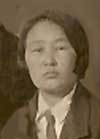
1940-44 Head of State
Khertek Anchimaa-Toka, People's
Republic of Tannu Tuva |
|
As Chairperson of the
Presidium of the Parliament, the Little Hüral, Khertek
Amyrbitovna was the
Head of the
state
which became Independent in
1921, a People's Republic in 1926, was incoroprated into the Soviet
Union in 1944. She had held
various jobs in local administration and the party administration,
Chairperson of the
Women Department of the Central Committee of
the Tuvinian People's Revolutionary
Party
1938-1940. Married to the First Secretary of the TPRP, Salchak
Kalbakkhorekovich Toka in 1940, Deputy Chairperson of Oblast Executive
Committee
1944-1961 and
Deputy
Chairperson of the Council of Ministers of Tuva
1961-1972.
She lived (1912-2008). |
|
|
1940-46 and 1946-47
HH Shrimant Akhand Soubhagyavati Maharani Tara Bai Sahib
Maharaj of Kolhapur (India) |
|
Also known as Tarabai Sahib Chhaatrapati or
Indumati Devi, she was widow of Maharaja Sir Rajaram II Bhonsle
Chhatrapathi Maharaj who "only" had one daughter. She therefore
adopted a relative, Shivaji V, who lived (1941-46). Tarabai also
adopted his successor. Born as Princess of Baroda (b.1904-). |
|
 |
1941-60 Acting Paramount Chief The Mofumahali 'MaNtsebo Amalia
'Matsaba Sempe of Basutoland (Lesotho) |
|
Reigned after the
death of her husband and succeeded
as ruler of the British protectorate of Basutoland - now known as
Leshoto - by her son, Moshoeshoe II, who was King 1960-70, 1970-88
and 1990-96. She lived (1902-65). |
|
|
1941-43 and 1947-48 Regent HH Shrimant Akhand Soubhagyavati
Maharani Pramula Bai Maharaj Sahib of Dewas (Senior) (India) |
|
Her
husband, Maharaja Sir Shahaji II (or Sir Vikramsinh Rao Tukoji Rao
Puar (1901-83)) was ruler of Dewar (1937-41) but abdicated in order
to become ruler of Kolhapur. He had been adopted by Dowager Maharani
Tara Bai (See below) and was succeeded in Dewar by oldest son,
Krishnaji Rao II. In Kolhapur succeeded by son of oldest daughter,
whom Sir Shahaji adopted. Pramula Bai is born as Princess of Jath
(b. 1910-). |
|
|
1941 and 1942-1943 Regent
Maharani Shri Gulab Kunwarba Sahib of Nawanagar (India) |
|
In charge of the government during the absences of her husband since
1935, Maharaja Jam Shri Sir Digvijaysinhji Ranjitsinhji Sahib
Bahadur of Nawanagar. She was Daughter of H.H. Maharajadhiraj
Maharao Shri Sir Sarup Ram Singhji Bahadur, Maharao of Sirohi, by
his first wife, H.H. Maharani Krishna Kunwarba Sahib, and lived
(1910-94 |
|
|
1941-46 Acting Paramount Chiefess Elizabeth Tshatshu of the
Xhosa Tribe of amaNtinde (South Africa)
|
|
Acted after the death of Mgcawezulu a Nongane until she was succeeded
by Zwelitsha a Mgcawezulu, who is still Inkosi Enkhulu. |
|
|
1941 Queen Mother Mutaleni kaMpingana of Ondonga (Namibia) |
|
After the death of King Martin Nambala yaKadhikwa she played an
important role in the selection of the 13th King of the Ondonga
area, Kambonde kaNamene (1942-1960). |
|

|
1941-79 Politically Influential HIH Princess Ashraf Pahlavi
of Iran |
|
In
1946 her twin brother, Shah Mohammed Reza Pahlavi, send her to negotiate
with Stalin in the Kremlin, to secure the return of some Soviet occupied
parts of Iran. She was Head of the Woman's Organization of Iran and a
Special Ambassador to the United Nations.
Her first two marriages ended in divorce, her third husband died.
According to Iranian usage, her sons two sons and their children had the
title H.H. Prince and father's surname. Her daughter is H.H. Princess
and the husband's surname. She lived
(1919-2016). |
|

|
1942-44 Counsellor of State HH Princess Maud Duff of the
United Kingdom of Great Britain and Northern Ireland, Countess of
Southeask |
|
Princess Maude only acted as ruling Counsellor once in 1943. She was the
younger daughter of The Princess Royal and the Duke of Fife, and was
married to the 11th Earl of Southeask (1893-1992). Her only son, James
Carnagie, succeeded her sister as 3rd Duke of Fife. Maude was appointed
as one of the Counsellors of State during king George VI's visit to
Africa, and lived (1893-1945) |
|
 |
1942-69 Dwabenhemaa Nana Dwaben
Serwaa II of Dwaben (Ghana)
1959-63 Dwabenhene
(King) |
|
Concurrent Queen and King of Dwaben. First enstooled as the Queen of
Dwaben and held the joint offices until1963, when she placed her son,
Nana Kwabena Boateng II on the male Stool of Dwaben, making him
Dwabenhene. She continued to rule as Dwabenhemaa until 1969, when she
abdicated. Nana Dwaben Serwaa II, is still alive and well over a
100yrs of age. She lives in Dwaben, in Ashanti and in Ghana. |
|
|
1943-57 Acting Chiefess Nofikile a Ngongo of the Xhosa Tribe of
imiDushane kaNdlambe (South Africa) |
|
Acting after the death of Inkosi Enkhulu Gushiphela a Menziwa
and succeeded by Zimlindile Payment Muyaka a Gushiphela, who is
still Chief of the tribe. |
|
 |
1943-55 Guardian Dowager Queen Ioanna of Italy of Bulgaria |
|
Married to King Boris III, who tried to remain natural as World War II
broke out, but he met with Hitler in 1940, and in 1941 became part
of the pact allying Germany, Italy and Japan. The king has long been
described as having been appalled at Hitler's massacres of Jews, and
on two occasions he refused orders to deport Bulgarian Jews. Queen
Ioanna intervened to obtain transit visas to enable a number of Jews
to escape to Argentina. After the death of her husband, Boris III
(1894-1918-43) her brother-in-law, Prince Cyrill became regent for
her son, Simoen II (1937-43-46-), until a referendum abolished the
Monarchy, and she fled with her children to Egypt and later to
Spain. Her son became Premier Minister of Bulgaria in 2001 under the
name of Saxe-Coburg. Born as Giovanna Savoia of Italy, she lived
(1910-2001). |
|
|
1944-48 Tenant Edna W. Fortington of Jethou (Crown Dependency of
the British Monarch) |
|
Took over the Tenantcy of the tiny Channel Island after the death of
Harold Fortington (1934-44). George MacDonald was Subtenant
(1940-45) and William Gill Withycombe was tenant (1948-55). |
|
|
Before 1944 Regent Princess Sharifah Leng binti al-Marhum Yang
di-Pertuan Muda Syed Abdul Hamid of Tampin (Malaysia) |
|
Daughter Sultan Sharif Abdul Hamid ibni al-Marhum Yang di-Pertuan
Muda Sultan Muhammad Shah al-Qadri (1872-94) she was regent for her
nephew Syed Akil bin Syed Dewa al-Qadri, Tunku Besar of Tampin, who
died at the age of 20, and whose brother, Syed Muhammad bin Syed
Dewa al-Qadri, ruled until 1944. |
|
 |
1944-77 12th Asantehemaa Nana Ama Serwaa Nyarko II of
Asante (Ghana) |
|
The second Queen mother during the reign of king Otumfuo Nana Osei
Agyeman Prempe II (1892-1931/35-70) and during of Otumfuo Nana Opoku
Ware II (1919-70-99). She was granddaughter of Aufa Kobi Serwaa Ampen
I, who was (1859-1884) and daughter of daughter of Akua Afriyie, the
Kumasehemaa. In 1977 she was succeeded by the present Asantehemaa,
Nana Afua Kobi Sewaa Ampem II - who is Queen Mother for the present
king, Otumfuo Nana Osei Tutu II (1950-99-). |
|
 |
1944-55 Acting Head of the Princely Family HSH. Dowager Princess
Margareta Fouche d'Otrante of Sayn-Wittgenstein-Berleburg (Germany) |
|
After
her husband Gustaf Richard was reported missing during WWII she became
guardian for her son, Prince Richard (1934/44-). The family went into
exile in her Sweden, where she was born. Prince Richard later married
HRH Princess Benedikte of Denmark. Born as Duchess Fouche d'Otrante,
she lived (1909-2005). |
|

|
1944-58 Acting Head of the Princely Family HIH Dowager Grand
Duchess Alexandra zu Hannover-Cumberland of Mecklenburg-Schwerin
(Germany) |
|
Following the death of her husband, Friedrich Franz IV, she was guardian
for her son, Grand Duke Friedrich Franz V (d. 2002) as the last of his
family. She was daughter of Princess Thyra of Denmark and Ernst August
von Hannover, Duke of Cumberland, mother of four children and lived
(1882-1963). |
|
 |
1946-58 Acting Paramount Chiefess, Queen Mother Elizabeth
Pulane Seeco of baTawana (British Protectorate, Botswana) |
|
Also known as Princess Pulane Moremi, she was widow of Moremi III
(1915-37-46). As regent she administration of the Tribal
Administration, which had been mired by inefficiency and corruption.
Her regency was troubled by the need to balance the interests of her
morafe's diverse population. She helped open the door for such
groups as the Wayeyi and Ovaherero to run their own affairs. On the
national stage she joined forces with Dikgosi Tshekedi and Bathoen
II in calling for self government. Stepped down in favour of her son Letsholathebe II (1940-58-81),
and lived (1912-81). |
|
|
1946-47 Rani Mariyumma Adi-Raja Bibi of Cannanore (India)
|
|
Also known as Ali Raja Bibi Arakkal Mariumma or Ali Raja Mariumma
Beevi Thangal, she was the last ruler before the
principality was incorporated in the Republic of India. It is not
known when she died, but Adiraja Ayisha Muthu Beevi (1922-2006) was head of the Head of the
Arakkal royal house from 1997 and was succeed by Adiraja Ayisha
Beevi as the Arakkal Beevi (or Beebi) near the City that is now
known as Kannur. |
|

|
1946-68 Deputy Seigneur Jehanne Beaumont Bell of Sark |
|
Youngest of Dame Sibyl Hathaway's 6 children, she was appointed to act
as her mother's substitute during her absence in 1946. In 1947 she was
elected Deputy of the People on Chief Pleas and retired from the post of
Deputy Seigneur in 1968 due to ill health, but continued to take an
interest in Sark's affairs, advising the present Seigneur when he
succeeded on the death of La Dame in 1974 until her death. She married
in 1948 and lived (1919-88).
|
|
 |
1946-90 Partner in Power Nexhmije Xhugilini Hoxa, Albania
|
|
Married to Enver Hoxa, Prime minister 1945-53 and President 1954-85.
During the resistance war 1941-46, she was a close advisor of her
husband. 1946-55 Chairperson of the Women's Wing of the Communist
Party, 1952-90 MP, 1968-90 Director of the Institute of Marxist
Studies and 1986-90 Chairperson of Albania's Democratic Front, which
controlled all the political organizations of the country, and
appointed candidates for the parliament. She was imprisoned 1991-96
charged with corruption and abuse of power. (b. 1921-). |
|
 |
1946-54 Partner in Power Eva Duarte de Peron, Argentina |
|
Known as Evita Peron, she was very powerful during her husband, Juan
D. Peron's first tenure as President (1946-55). In 1951 the military
prevented her candidature for the post of Vice-President. Very
popular among the masses. Juan Peron's third wife, Isabel Peron, was
vice-President 1973-74 during his second term in office, and
succeeded him as President after his death in 1974. Eva Peron lived
(1919-54). |
|
 |
1947 and 1948 Princess-Regent Juliana of the Netherlands
1948-80 By the Grace of God Queen of the Netherlands |
|
Member of the Council of State from her 18th birthday in 1927.
From 1927 to 1930, she attended lectures at Leiden University. Regent
during the illness of her mother, Wilhelmina and succeeded her upon
her abdication. The people of the Netherlands watched as their Queen
often appeared in public dressed like any ordinary Dutch woman. Like
her mother had out of necessity,
Queen
Juliana began riding a bicycle for exercise and fresh air. She began
visiting with the citizens of the nearby towns and, unannounced,
would drop in on social institutions and schools. Her refreshingly
straightforward manner and talk made her a powerful public speaker.
On the international stage, Queen Juliana was particularly
interested in the problems of developing countries, the refugee
problem, and had a very special interest in child welfare,
particularly in the developing countries. In 1949, she signed the
documents transferring sovereignty to Indonesia and in 1954 she gave
her assent to the Charter for the Kingdom of the Netherlands, which
formed the basis for cooperation between the three remaining parts
of the Kingdom: the Netherlands, Suriname and the Netherlands
Antilles. Suriname became an independent republic in 1975. Closely
involved in social questions and involved in the running of the
government until her abdication
in favour of her oldest daughter, Queen Beatrix. She has since been
known as HRH Princess Juliana of the Netherlands, and
since the early 1990s, she has gradually
withdrawn from public life. Also Princess van Oranje Nassau,
Duchess van Mecklenburg-Schwerin
etc, etc, etc., she was married to Prince Bernhard zu
Lippe-Biesterfeld (1911-2004), and mother of four daughters.
She lived
(1909-2004). |
|

|
1947-49 Regent Rajmata Krishna Kumari of Marwar and Jodhpur
(India)
1949-69 Acting Head of the Princely Family |
|
H.H. Maharani Shri Krishna
Kunwarba Baiji Sahiba, Princess of
Dhrangadhra, she was regent for son, Maharaja Gaj Singh II
(1923-47-52-), After her husband, Maharaja Shri Hanwant Singhji Sahib Bahadur
was killed in a plane-crash, and continued as his guardian and was
in charge of the interests of the princely family . She provides a
strong cultural binding to the family. She was Member of the Lok Sabha 1971-77 and continues to participate in a myriad of social
and religious activities. (b. 1926-). |
|
 |
1947-48
President of the Council of Regency Dowager Maharani H.H. Sri
Srimati Maharani Kanchan Prabhavati Mahadevi Sahiba of Tripura
(India)
1948-49 Regent (Radhakrishnapada Srila Srimati Maharani)
|
|
Also known as Kanchan Prabha Devi. After the death of her husband Bir
Bikram Kishore Manikya in May 1947, a council of regency under her
leadership took over charge of administration on behalf of her minor
son, prince Kirit Bikram Kishore Manikya (b. 1933). The state was
faced an immediate refugee problem, which brought conflict between
the people, severe strain on the administration and threatened to
exhaust the meagre resources of the state, and she was forced to
cede sovereignty to India within a few months and signed the treaty
which transferred the state to the Union of India on 9th September
1947 coming effect two years later. Tripura became a Union Territory
on 1st November 1956. The Territorial Council was formed on August
15, 1959. The dissolution of Territorial Council and formation of
Legislative Assembly and a Council of Ministers in July 1963 were
notable events. Finally Tripura became a full-fledged State in
January 1972. She was the eldest daughter of Colonel H.H. Mahendra
Maharaja Sri Sir Yadvendra Singh Ju Deo Bahadur, Maharaja of Panna,
by his first wife, H.H. Mahendra Maharani Sri Manhar Kunwarba Sahiba,
and lived (1914-73). |
|
|
1947-50
President of the Minority Administration H.H. Jadeji
Maharani Shri Krishna Kunverba Sahib of
Sirohi (India) |
|
Known as H.H. the
Rajmata Sahiba, she became regent for the
adopted son of her husband, H.H. Maharajadhiraj Maharao
Shri Tej Ram Singhji
Bahadur (1946-50) after it had been headed by the Chief
Minister for since his accession. Her husband, Maharajadhiraj Maharao
Shri Sir Sarup Ram Singhji
Bahadur had reigned 1920-46. Tej
Ram Singhji was removed by
the Government of India in 1950 and replaced by Thakuran
Raj Shri Abhai
Singhji of Manadar, following a
lengthy investigation into the circumstances surrounding his
adoption. She was born as
Maharajkumari Bai Shri
Takhatba Sahib as the fourth and youngest daughter of H.H.
Maharajadhiraj Maharao
Mirza Shri Khengarji III Sawai
Bahadur of Cutc and she (d.
1979). |
|
|
1947-57 Maradia Regnant of Balannipa (Indonesia) |
|
The state is also know as
Balangnipa. After the abdication of her husband, Haji Andi Depu Baso, she ruled in
her own right until 1950 and the following seven years in a
temporary basis. She was succeeded by the grandson of the brother of
the father of her husband, Puang Manda' alias Haji Andi Syahribulan
(1959-1963) as the last ruler of the Mandar area north of the main
Buginese area. It was a sort of confederation of seven
principalities with the Maradia of Balangnipa as chief. In 1873 the
Dutch made all the seven states real separate principalities. (b.
1907-). |
|
|
1947-87 Queen Maria Mwengere of Shambyu (Namibia) |
|
Succeeded king Mbambangandu II, who became blind. She prohibited the
brewing of traditional beers with sugar, but also curtailed the sale
of all kinds of liquor in the Sambyu area. The brewing of
traditional beers without the use of sugar for own consumption was
however still permitted. On many occasions during the sixties, she
severely punished transgressors by fining them up to four head of
cattle, but she later stopped this praxis because of strong
opposition from her people. In 1989 Hompa Angelina Ribebe Matumbo
became Queen of the Shambyu. She lived (circa 1898-1987). |
|

|
1949-52 Vice-Chairperson of the Council of Ministers Ana
Pauker, Romania |
|
Minister of Foreign Affairs 1947-52 and
Vice-Premier. Before that she had been Leader of the Romanian
Communists in USSR 1940-44 and circa 1940-53 Responsible for the
collectivizing of the Agriculture in the Politburo, 1944-56 Secretary
General of the Communist Party. She was born Rabinovici but changed her
name because of anti-Semitic sentiments, which eventually caused her
downfall. She was daughter of Rabbi Hersch Kaufmann Robinsohn and lived
(1893-1960). |
|
 |
1949-75 Makea Nui Teremoana Ariki,
31st
Makea Nui Ariki
of the Teauotonga Tribe in Rarotonga (Cook Islands) |
|
Also known as Makea Nui Teremona Ariki Tapuanoanoa Tinirau Cowan, she was member
of the Rarotongan Legislature 1947-59 and represented the Cook Islands in the
South Pacific Commission an institution established by the regional Colonial
powers to promote 'native welfare' in their Pacific colonies in 1947. She
succeeded her sister, Makea Nui Tinirau Ariki, and married Kainuku Parapu Ariki
and was succeeded by daughter, Margaret Tepo Vakatini Ariki, who died in 1988
and then by her oldest daughter. She lived (circa 1910-75). |
|
 |
1949-94 Makea Karika Takau Margaret Ariki,
27th Makea Karika Ariki
of the Teauotonga Tribe in Rarotonga
(Cook Islands) |
|
Margaret Tarau was President of the House of Ariki 1978-80 and
1990-94, and was one of the 3 chief of the Teauotonga tribe in
succession to her father, Makea Karika George Pa, who had succeeded
his mother Makea Karika Takau Tuaraupoko Mokoroa ki Aitu in 1942,
and lived (1919-circa 94). |
|
|
1949-62 Titular Acting Head of the Sovereign Family Baroness
Maria Gizela Tunkl-Iturbide, Princess de Iturbide of Mexico |
|
Her
mother, Princess Maria Josepha Sophia had stated in her will and
Maria Gizela and her older unmarried sister Maria Anna Wilhelmina
(b. 1909) had agreed that the leadership of the Mexican Imperial
Family passed to Maria Grizela's son, Count Maximiliano von Goetzen
Iturbide, (b. 1944), who continues to be head of the Iturbide
dynasty but has made no attempt to press his claim to the imperial
throne of Mexico. He is married and currently lives in Australia
where he is a successful businessman. His heir apparent is his son
Count Fernando Goetzen Iturbide (b. 1992). Baroness Maria Gizela
first lived in Venezuela and Uruguay before moving to Australia. She
is (b. 1912-). |
|

|
1950-circa 95 Temporary Royal Regent HRH The Princess Mother,
Somdet Phra Srinagarindra Boromarajajonani of Thailand |
|
Sangwalya Chrukamol was born as the daughter of a goldsmith. She was
married to Prince Mahidol of Songkhla, son of king Chulalongkorn Rama V
(1868-1910) by one of his 92 wifes. She was mother of King Anadan
Mahidol Rama VIII (1925-35-46) and of King Bhumibol Adulyadej Rama IX
(1927-46). She acted as
regent on nine different occasions during Bhumibol's reign. She
lived (2443-2538 or 1900-95). |
|
|
1950-ca 59 Datuk I Suji of Suppa (Indonesia) |
|
Her
son La Kane (or Kunen/Kuneng) is the present chief of the dynasty of
Suppa. She (d. circa 1992). |
|
|
1951-... Adatuwang Regnant Bau Rukiah of Sawito
(Indonesia) |
|
Appointed
as ruler of the state. |
|
1951-
Paramount Chief
Madam Tity Messi of Kwameba Krim (Sierra Leone) |
|
She was head of 66 chiefs in the Benduma
District as head of a new chiefdom which was an anamalgamation of
three krim chiefdoms: Messie, Kwako and Baiama. The area is situated
near the Liberian boarder, and fighting erupted early in the
territory.
|
|
 |
1951-85 Counsellor of State HRH Princess Margaret
of United Kingdom of Great Britain and Northern Ireland |
|
As
the younger sister of Queen Elizabeth II, she acted as
Counsellor of State on various occasions until her youngest nephew,
Prince Edward, turned 21. Among others Special Representative of the
Queen to the Independence Celebrations of Jamaica in 1962, Domenica and
Tuvalu 1978 and of Antigua and Barbuda and of Saint Christopher and
Nevis in 1980. Divorced from Anthony Armstrong-Jones, who were created
1st Earl of Snowdon, and mother of two children. She lived (1930-2002). |
 |
1952- H.M. Elizabeth II of United Kingdom of Great Britain
and Northern Ireland and Her other Realms and Territories Queen,
Defender of the Faith, Head of the Commonwealth |
|
Until 1953 her title was
Queen
of Great Britain, Ireland and the British Overseas Dominions. She is
head if state in 15 countries apart from Great Britain and as
Head of the Commonwealth,
she is the front person of the organization of many other former
British colonies and territories. She is the
first child of The Duke and Duchess of York. Although when born it
was unlikely that she would become Queen, events in the 1930s led to
her father's Accession and her becoming heir to the Throne. Her
reign takes place during a period of great social change, she has
carried out her political duties as Head of State, the ceremonial
responsibilities of the Sovereign and an unprecedented programme of
visits in the United Kingdom, Commonwealth and overseas.
Elizabeth Alexandra Mary is the
mother of three sons and a daughter. Married to Phillip Mountbatten,
former Prince of Greece. (b. 1926-).
|
|
 |
1952-53 Head of the Regency Council H.M. Queen Zein al-Sharaf
of Jordan |
|
In
her official Jordanian biography it says that her political
instincts and courage allowed her to successfully fill a
constitutional vacuum after the assassination of the late King
Abdullah in 1951, while the newly proclaimed King Talal was being
treated outside the Kingdom for his mental illness. When he was
deposed in August 1952 she was
regent
until her son, Hussein I, until he turned 18 in May the following
year. She played a major role in the political development of the
Kingdom in the early 1950s, and took part in the writing of the 1952
Constitution that gave full rights to women and enhanced the social
development of the country. Born in Egypt as daughter of the Court
Chamberlain, Sharif Jamal Ali bin Nasser, she was mother of three
sons and a daughter, and lived (1916-94). |
|
|
Around 1952 Liurai Clara Assi of Fatu Mean (Timor Leste) |
|
The
state was included in the list made by the Portuguese in 1952, then
in the district of Bobonaro. |
|
|
Around 1952 Liurai Bai Buti of Irlelo (Timor-Lester) |
|
Also situated in the former district of Bobonaro in East Timor, which
was occupied by Indonesia 1974-99, an UN Protectorate until 2002,
when it became independent. |
|
 |
1953-58 H.H. Queen Aloisia Lavelua of Uvea (Wallis and
Futuna) (French External Territory) |
|
The
Monarchs and chiefs are still involved with the government of the
French External Territory Wallis and Futuna. After the death of King
Kapeliele Tufele Lavelua (1950-53), the Council of Ministers reigned
until Soane Toke Lavelua became king for one day - 18.-19. December.
On 22. December Aloisia Brial née Tautuu became Queen. After her abdication, the
Council of Ministers again reigned until Tomasi Kulimoetoke II
became king at the 12th of March 1959 and reigned until 2007. (d.
1972) |
|
|
From 1953 Acting Paramount Chiefess Nonayithi Jali a Mthati of
the Xhosa Tribe of imiQhayi (South Africa) |
|
Acting after the death of the acting Chief Bofolo a Ntonisi a
Donddashe. It is not known when she was succeeded by Inkosi
Enkhulu
Mabundu Bangelizwe Jali a Enoch, who is still chief.
|
|
 |
1953-67 and 1992-2006 Paramount Chiefess Madam Ella Koblo
Gulama of Kaiyamban (Sierra Leone) |
|
Elected to succeed her father,
Julius Gulama,
as head of the tribe and district. 1957 she was elected the first
female MP and was Minister without Portfolio 1963-67.
Imprisoned during the political unrest from 1967-70 and deposed as
Paramount Chief, Vice-President of the conference on Finance and
Administration of the United Methodist Church 1985-91, she also
worked hard to promote the education of girls and to improve the lot
of women as President of the Federation of Women’s Organisations in
Sierra Leone 1960-67 and President of the National Organization for
Women 1985-91. Re-elected Paramount Chief of Kaiyamba Chiefdom by a
unanimous vote in 1992. The rebel war and its effects were
devastating to Moyamba District and the country as a whole,
resulting in complete setback to development and progress. She was
forced to leave Moyamba and seek refuge in Freetown. On her return
to Moyamba, she again put all her efforts into the rehabilitation of
her Chiefdom and District. Director of the Sierra Leone Export
Development and Investment Corporation (SLEDIC) 1994-96 and also a
director of The Sierra Leone Commercial Bank Limited. 1997 she fell
ill and appointed a regent. She was
married to
Paramount Chief Bai Koblo Pathbana II Marampa Masimera Chiefdom,
mother of 7 children, and lived
(1921-2006).
|
|
 |
1953 Candidate for the Throne
Princess Fatima Ibrahim Didi Tuttu Goma of the Maldive Islands |
|
In
1944 the throne was first offered to the erstwhile Prime Minister Athireegey
Abdul Majeed Rannabandeyri Kilegefan, but he declined and remained in exile
until his death in 1952. She was offered the throne in 1953 but withdrew her
candidature when opposed by the clerics headed by 'Abdu'llah Jalal ud-din.
Born as Princess Fatima Tuttu Goma, she was daughter Princess Gulistan
of the Maldives and her cousin Al-Amir Ibrahim Fa'amuladeri
Kilegefa'anu, who later became Ekgamuge Ibrahim 'Ali Didi (d. 1975),
and was member of the Regency 1943-1953 and Prime Minister 1953-1957.
She was President of the Senate of the
First Republic 1953-54. Married to
H.E. Ahmad Zaki (1931-96), who held many government and ambassadorial
posts, including that of Prime Minister 1972-1975 and Permanent
Representative at the UN 1979-1983 and 1993-1996. One of her two sons
were Defence Minister. She lived (1918-2008). |
|
 |
1953-77 Politically Influential Jovanka Budisavlevic Broz,
Yugoslavia |
|
Jovanka Broz is thought
to have had a substantial influence in the army and the country,
until her husband, Josef Broz Tito, sent her in internal-exile. She
was a lieutenant in the army when they got married. She lived (1923-2013). |
|
 |
1953-98 Partner in Power Kim Song Ae in North Korea |
|
Married Kim II Sung (1912-94) in 1953. He was General Secretary of the
Korean Worker's Party 1948-94, Premier Minister (1948-72), President
(1972-94) and created an austere and militarized regime. Kim song Ae
was Vice-Chairperson 1965-71 and 1971-98 Chairperson of the Central
Committee for the Women's League, since 1980 Member of the Central
Committee of the Korean Workers Party, from 1982 Member of the
Standing Committee in the Supreme People's Assembly, and considered
to be domineering force and very influential. (b. 1924-). |
|
 |
1954-63 Partner in Power Van Le Xuan Tran in South
Vietnam |
|
In
the Westen World she was also known as Mme Ngo Dinh Nhu, she was the
official first-Lady during her brother-in-law, Ngo Dinh Dimen's term
as Premier 1954 and President 1955-63. She was also member of the
National Assembly. Ngo was deposed and killed together with her
husband, Ngo Dinh Nhu, Chief of the Secret Police. She survived
because she was in USA on a Public Relation Tour together with her
daughter. (b. 1920-). |
|
|
Circa
1954-? Leirojlaplap
Dorothy Litarjikut of Majuro, Arno and Mili (Marshall Islands) |
|
Married to Iroijlaplap Joba Kabua of Guajlen (Kwajalein) and mother of
Amata Kabua, who was President of the Marshall Islands 1979-96. |
|
|
1954-71
Guardian Regent Dowager H.H.
Sri Badrukhanwala Maharani
Malvender Kaur Sahiba of
Dholpur (India) |
|
When her husband, Maharajadhiraja
Shri Sawai Maharaj Rana Sir Udai Bhan Singh, she adopted the second
son of their only daughter, Maharani Urmila Devi Sahiba (1924-97)
and her husband Maharaja Shri Sir Pratap Singh Malvendra Bahadur of
Nabha, Maharajadhiraja Shri Sawai Maharaj Rana Shri Hemant
Singh (b. 1951-), who was recognized as the new Maharaja by the
government of India in 1956 with effect from October 1954, but was
deposed as "ruler" in 1971 following the new constitution. He is
married to Maharajkumari Shrimant Vasundhara Raje Sahib Scindia, BJP
Politician, former Union Minister of State and Chief Minister of
Rajasthan since 2003. Maharani Malvender lived (1893-1981). |
|

|
1954-61 Head of the Sovereign Family HH. Princess Abigail
Kapiolani Kawananakoa of Hawai’i (USA) |
|
Succeeded her brother Prince David, who became Head of the Royal Family
in 1917 as successor to their cousin, Queen Lil’uokalani. Abigail was
succeeded by son by Andrew A. Lambert, HRH Prince Edward Keliiahonui
Kawananakoa, who died in 1997 and was succeeded by his son Edward J.
Kawananakoa. Other relatives also claim the throne. She lived (1903-61) |
|
 |
1956 Regent H.M. Somdetch Pra Nang Chao Sirikit Phra Baromma
Rajini Nath of Thailand (22.10-07.12) |
|
Took the oath as regent before the National Assembly, as
her husband, King Bhumibol, retired to do the traditional Buddhist
studies. She was born as Mom Rajawong Sikrit
Kitiyakara of Chandaburi - as a distant member of the royal family.
Since 1956 she has had the title Somdetch Pra Nang Chao Sirikit Phra
Baromma Rajini Nath (Queen Regent) and still occasionally acts as
Deputy Head of State. Mother of a son and three daughters. (b.
1932). |
|
 |
1956-60s Politically Influential Khieu Ponnary in Cambodia |
|
Known as "Sister Number One", she played a key role in the development
of the Khmer Rouge, and was head of the Cambodian national women's
association during the period 1975-1979. She was the first Cambodian
woman to get a high school degree and met Pol Pot, also known as
Saloth Sar, in 1951, during her studies in Paris. They married in
1956 and returned to Cambodia, where she helped him build his
revolutionary ultra-communist movement, the Khmer Rouge. From the
1970s she suffered from dementia and mental illness. Her sister
Khieu Ieng Thirith was Minister in the government until 1982.
Ponnary lived (1920-2003). |
|

|
1957-75 Joint Head of State The Ndlovukati Zihlathi Ndwandwe
of Swaziland |
|
Senior wife of King Sobhuza II. |
|
 |
1957-62/80 Counsellor of State HRH Princess Alexandra
of Kent, of the United Kingdom and Northern Ireland |
|
Dughter of Queen Elizabeth's late cousin, the Duke of Kent, she acted as
Counsellor of State during the minority of the closest heirs to the
throne, and among others special representative of the Queen at the
independence Celebrations of Nigeria in 1960 and Saint Lucia 1979. Widow
of Sir Angus Ogilvy (1928-2004), and mother of two children.
(b. 1936-). |
|
 |
1957-62 Queen Dowager Doña Isabel Maria da Gama of Kongo
(Angola)
1962-?75 Queen Regent |
|
Her
husband, Dom Antonio III, was king (1955-58), she succeeded him and
in 1962 her son, Dom Pedro VIII Mansala, was king September-October
and afterwards she took over the reigns again with the title
Ntolia y aNtino ne Kongo.
Some sources claims she is still in office, others that
her regency ended in 1975. |
|

|
1958
Acting Chief Executive Angie Elizabeth Brook-Randolph, Liberia
1967-68 President of the United Nations-Trusteeship
Council in charge of Nauru, Papua New Guinea, and the Pacific
Islands Territories |
|
1953-58 Assistant Attorney General and 1956-73 Assistant Secretary of
State. In 1958 she acted as Chief Executive as both the President and
the Secretary of State were abroad for some days. 1967-68 President of
the United Nations-Trusteeship Council (Administering Nauru, Papua New
Guinea, and the Pacific Islands Territories), 1969 and 1976 she was
President of the General Assembly of the UN, 1973-75
Ambassador-at-Large, 1975-77
Ambassador to the United Nations and Cuba, and in 1977 appointed
Judge in the Supreme Court. (b. 1928-). |
|
 |
1958 Acting Prime Minister The Hon. Ellen Lourkes Fairclough,
Canada (19.02-20.02) |
|
Progressive Conservative MP 1950-63, and has been Privy Councillor
since 1957 when she became the first female member of the Government
as Secretary of State for Canada, 1958-62 Minister for Citizenship
and Immigration and1962-63 Postmaster General. She was appointed
Acting Premier for the first of January 1958. She lived (1905-2004).
|
|

|
1958
Acting Prime Minister Ulla Lindström, Sweden |
|
The
longest serving Minister as Minister without Portfolio of Family Affairs
1954-66. Already in 1950 Premier Minister Tage Erlander (1946-69) wanted
to appoint her as Foreign Minister, but the majority of the Social
Democrats was against it. She was daughter of Nils Wohlin, Minister of
Trade in the 1920s and 1928-29 for two right-wing parties. She lived
(1910-99). |
|
 |
1958-66 (†) Politically Influential Aisha Diori in Niger |
|
Controlled her husband, president Hamani Diori, (1916-89), like a
marionette. She was killed during an attempted coup d'etat but
executed Aisha. Her husband was the Prime Minister (1958-60) and the
first President after Niger's independence in 1960 until he was
deposed in 1974. |
|
 |
1959-80 Rain Queen Makoma Modjadji IV of Balobedu (South
Africa) |
|
The
Queen, apart from her ruling responsibilites, has the duty of
providing her nation with rain. Succeeded by daughter Mokope
Modjadji V in 1981.
|
|

|
1959-70 Chairperson of the Presidium of the Supreme Soviet
Yadar Sadykovna
Nariddinova, Uzbekistan (Autonomous Soviet Republic in the USSR) |
|
1952-59 Deputy Premier, Minister of Construction Industry in Uzbekistan,
1959-70 Vice-Chairperson of the Supreme Soviet before becoming "Head
of State" of the Republic. 1970-74 she was
President of the Federation Council of the Supreme Soviet of the
USSR.
She lived (1920-2006). |
|
 |
1959- Mulena Mukwai
Makwibi Mwanawina,
Chief
of the Southern Part of Bulozi and Regent Princess
of Barotseland (Zambia) |
|
As Mulena Mukwai Mboanyikana
of Libonda 1951-58, she was third-ranking in the hierarchy of the
kingdom. She is daughter of Sir Mwanawina III, Litunga of the Lozi and
Paramount Chief of Borotselan (1888-1948-68).
Most of the year she is based at
Nololo, the traditional capital of the south
and second most important royal centre of Barotseland, but in the flood season,
she proceeds in her own Nalikwanda barge to Muoyo on the eastern margin of the
flood plain. (b. 1919-) |
|
|
1959-68-? Manavara Upoko Tiao Campbell, The Cook Islands (New
Zealand External Territory) |
|
Inherited
the title of Manavara in 1959. The mother of two daughters.
[Perhaps she is identical with Tangianau Upoko, who was born 1926 and
was the Kavana and is Pava (High Chief) of Veitatei District and the
Kairanga Nuku (Subchief) from 1950 and High Chief 1980-2000).
Tangianau Upoko is married to Tuaere Utikere. |
|
 |
1960-70 Ceremonial Head of State, Symbol, Incarnation and
Representative of the Crown H.M. Queen Sisovath Monivong
Kossomak Nearieath Serey Cathana of Cambodia (20.06-18.03) |
|
In
1955 she was crowned with her husband King Norodom Suramit, who
succeeded their son, Prince Norodom Sihanouk who had succeeded her
father as king in 1941. After her husband’s death, After her
husband’s death she was officially nominated as Queen Regnant in the
Crown Council, but instead her son became Head of State after a
referendum, and during the swearing-in ceremony in the National
Assembly he declared that "The Queen Kossamak incarnate and
represent the Cambodian Dynasty". She carried out the ceremonial
duties and was in effect
Queen Regnant without reigning. After her son was deposed in 1970
she spend the rest of her life in exile in Beijing. She lived
(1904-75). |
|
 |
1960-65, 1970-77 and 1994-2000 Prime Minister Hon. Sirimavo
Ratwatte Dias Bandaranaike, Sri Lanka |
|
As
Prime Minister,
she also held the posts as Minister of Foreign Affairs, Defence,
Finance etc. She was the world's first female Prime minister, and
was born into an influential Sri Lankan family, many of whose
members had been involved in politics. In 1940, in an arranged
marriage, she wed the politician Solomon Bandaranaike, who was 17
years her senior. Her husband became Prime minister in 1951, but she
did not take a prominent political role herself at this time.
However, when a Buddhist extremist assassinated him in 1959, she
campaigned to succeed him and won the ensuing election. During her
second term of office her domestic policies of nationalization and
social welfare proved popular with her Sinhalese compatriots, as did
the creation of a Sri Lankan republic in 1972. Yet the attempt to
make Sinhalese the island's official language - long a goal of her
husband - alienated the Tamil minority population. Economic
difficulties and charges of corruption caused her downfall in 1977.
In 1980 she was convicted of abuse of power during her term as Prime
minister and debarred from office for four years. 1988 Presidential
Candidate and before
her appointment to Prime Minister in 1994, she was Senior Minister
without Portfolio (Second in Cabinet) in her daughter,
Chandrika's Kumaratunge's
cabinet.
She was
Chairperson 1960-93 and 1993-2000 President of Sri Lanka Freedom
Party, 1965-70 and 1988-94 Leader of The Opposition
and
1976
Chairperson of the Association of Non Aligned Nations.
Two of
her three children are also politicians. She lived (1916-2000). |
|
|
1960-61 Acting Chairperson of the Presidium of the Supreme Soviet
Kapitalina
Nikolayevna Kryukova, Kazakstan (Autonomous Soviet Republic
in the USSR) |
|
Калима Аманкулов was Vice-Chairperson of the Presidium of the local Supreme
Soviet and acting as it's chair, during a vacancy at the post, which
were equivalent to that of Heads of State of the Soviet Republics,
though power were vested in the First Secretary of the Communist Party.
|
|

|
1960-62 Chief Alphonsine Lafond, Muskeg Lake (Canada)
|
|
The
first female chief of Muskeg Lake Reserve in Saskatchewan. She was
Councillor 1958-60, before elected chief in an open democratic election.
In 1960, the Department of Indian Affairs installed the first
residential phone on the reserve in Alpha's home. Her priorities
as chief were to improve education, housing and roads. She retired in
1990, but was a member of the education and housing committees as an
Elder until her death. She lived (1926-2000). |
|
|
1960-62 Chief Mary Louise Bernard, of the Lennox-Island
Confederacy of Indian Nations in Nova Scotia (Canada) |
|
Throughout many years Chief of the Wagmatcook First Nation - or band,
and involved in the Confederacy politics. |
|
|
Until
1960s Sachem Elizabeth Sakaskantawe Brown of the he
Quinnipiac in Totoket (Branford in Conneticut) (USA) |
|
The
last hereditary matriarch; and she was related to the last Sachems of
Mioonkhtuck James Mah-wee-yeuh. Married three times and lived
(1850s-1960s) |
|
 |
1960-93 Partner in Power Mama Cecilia Tamanda Kadzamia in
Malawi |
|
Functioned as
secretary, partner and hostess of President Hastings K. Bandas
(1896-1997) and very influential. From the late 1980s Bandas became
unceasingly senile, and she is believed to have been the real person
in power. From 1986 President of Malawi's Women's Organization. |
|

|
1960-95 Head of the Princely Family H.H. Sikander Saulat
Iftikhar ul-Mulk Haji Nawab Mehr Tai Sajida Sultan Begum
Sahiba, Nawab Begum
of Bhopal (India) |
|
Recognized by the Government of India as ruler of Bhopal, at the 13. of
January 1961 with effect from 4. February 1960, as her older sister,
Abaida Sultan had emmigrated to Pakistan. After her husband, Muhammed
Iftikhar Ali Khan of Pataudi (1910-1917-52) was killed in a
polo-accident, she was regent for her son Mansur Ali Khan (b. 1941), who
was captain of the Indian Cricket team 1960-75. Under the name of Begum
Sajida Sultan, she was member of the Indian Parliament for Bhopal
1957-62. Succeeded by grandson, and lived (1915-95). |
|
 |
1961-2004
The Roko Tui Dreketi, Paramount Chiefess
of Rewa and Traditional Head of Burebasaga Confederacy
Ro Adi Lady Litia Cakobau Lalabalavu Kaloafutoga, Lady Mara (Adi Lady
Lala Mara) (Fiji) |
|
The confederacy covers Rewa, Nadroga, Serua, the Island of Kadavu and
Parts of Ba and Ra. Also known as Ro Litia Cakobau Lalabalavu
Katoafutoga Tuisawau Mara, she married Ratu Sir Kamisese Mara in 1950.
He was the Tui Lau, Tui Nayan and Tevita Uluilakeba, the Traditional
Head of the Confederation of Touata Tribes (d. 2004), Prime Minister
and President of Fiji. Around 1993 Co-Leader of Fijian Political Party
and later Chairperson of the Regional Council of Rewa. Succeeded her
father, George Cokanauto Tuiswau (1904-61) as Roko Tui Dreketi. Her
mother, Adi Asenaca Vosailagi was Paramount Chieftainess of the
chiefly Ka Levu clan of Nadroga. She was Paramount Chief and Radi Ni
Nayau, and after her death, she is known as the Gone Marama Bale na
Roko Tui Dreketi and was succeeded by sister. She was mother of 8
children, and lived (1931-2004). |
|

|
1961-74 Politically Influential H.I.H. Princess Tenagnework
Haile Selassie of Ethiopia |
|
After the death of her mother Empress Menen she became the most visible
and foremost woman at the Imperial court. She played an ever-increasing
advisory role. The Princess was one of the few people who were able to
freely offer criticism of official policy to the Emperor, and was often
a conduit of various points of view to the Emperor when those offering
opinions were too intimidated by the Emperor to offer them themselves. A
strong personality with conservative views, she was widely regarded as
being a guardian of the institution of the monarchy, and was concerned
that it be upheld in an era of rapid and often unpredictable change. She
was perceived as a leader of the traditionalist element within the
nobility that was very wary of demands for constitutional reform and
land reform policies. After the revolution, the women of the Imperial
House were imprisoned 1974-89, and one year later she left the country.
She returned to Ethiopia in 1999. She was First married to Ras Desta
Damtew, Governor of the Province of Sidamo. Secondly to Ato Abebe Retta,
who later served in ambassadorial and other roles in the post-war
Imperial government, and would eventually become President of the
Imperial Senate after their separation and thirdly to Ras Andargatchew
Messai, who had been representative for the underage Prince Makonnen in
his Duchy of Harrar. He was appointed Governor-General of Beghemidir and
Simien Province and in 1951 vice-roy of Ethiopia. Mother of seven
children with her two first husbands, and lived (1912-2003).
|
|
 |
1961- Head of the Princely Family H.H. Maharani Ushadevi Holkar
of Indore (India) |
|
Her
full title is H.H. Maharanidhiraja Rani Rajeshwar Sawai Shrimant
Akhand Soubhagyavati Usha Devi Maharaj Sahiba Holkar XV Bahadur. She
had been declared Heir-Apparent, in preference to her only brother,
Prince Richard Holkars, whose mother was American, by special
gazette of the Government of India, 1950. Like all the other royals
she was deprived of her rank, titles and honours by the government
in 1971. Married to the industrialist Shrimant Sardar Satish Chandra
Malhotra and mother of 2 sons and 2 or 3 daughters.
(b. 1933-). |
|
 |
1961-99 Paramount Chief Madam
Honoraria
Bailor Caulker of (Sierra
Leone) |
|
Member of the National Advisory Council and later of the National
Reformation Council from 1961. President of the Women's Action for New
Directions. This system of
"politricks" was deeply rooted
in Kagboro Chiefdom, and brought
multiple disputes and enquiries
between the Paramount Chief and the
Chiefdom Speaker, the tribal
councilors and the Temne of Plantain
Island. In 1962, most of the Ghanaian fishermen moved from Shenge,
but there seemed to be an insoluble cold war between the Temnes
and those Ghanaians who had chosen to
stay behind, and between
the Members of Parliament and the
Paramount Chief. Each had
strong political backing.
In the late 1970’s, Shenge was once again
destroyed and several
historic buildings, including
her compound. During the Rebel War of 1990-2001, the
she
was forced into
hiding in the bush, but was later able to flee to the
United States,
where she died in 1999.
Her death created another round of complete
chaos within the
Caulker family. There was no semblance of unity.
Her grandmother
Madam
Sophia Neale-Caulker
was Paramount Chief 1898-1909. Honoraria
lived (1922-99) |
|

|
1962-63 President of the Narodna Skubscina Vida Tomsic,
Slovenia (Autonomous Republic in the Soviet Federal Republic of
Yugoslavia)
|
|
In
1945-46 she was Minister for Social Politics and in the 1950s Member of
the Executive Council and during her first tenure as President of the
Parliament she was also "Head of State". During her second period as
President of the Narodna Skubscina 1974-78, the President of the
Presidency of the state filled this position. (b.1913-). |
|
|
1962-69 Regent
Princess Maria Molinas Bertoleoni of Tavolara (Italy) |
|
Laid claim to the throne at a time when her cousin, King Carlos II, also claimed
the crown. The same year a NATO station was installed at the Island, the
effective end of Tavolaran sovereignty. She was daughter of the former regent, Princess Mariangela and Bachisio Molinas,
and lived (1869-1969) |
|
|
1963-83 Paramount Chief Madam Boi Sei Kenja III of Imperi
(Sierra Leone) |
|
Her chiefdom covered 93 Chiefs. She
was succeeded by Chief Hawa Kpanabon Sokan IV |
|
|
Around 1963 Paramount Chief Madam Kadiyatta Gata of Jong
(Sierra Leone) |
|
Head
of 172 Chiefs. |
|
|
Around 1963 Paramount Chief Madam Tiange Gbatekaka of Gaura
(Sierra Leone) |
|
Head
of 195 chiefs. |
|
|
Circa
1963-96 Paramount Chief Madam Benya of Small Bo (Sierra
Leone) |
|
She was head of 235 chiefs in the Blama District. Because of the civil
war, and Mohamed Benya was not elected chief until 2003. |
|
|
Circa 1963 Paramount Chief Madam Mammawa Sama of Tunkia
(Sierra Leone) |
|
Traced her lineage to the
founder of the chiefdom, Amara Sama.
|
|
 |
1963-69
Politically Influential First Lady
Lady Bird Johnson, United States of America |
|
Played a key role during the term of office of her
husband, Lyndon Baines Johnson, who became President when John F Kennedy was assassinated.
Despite her unassuming manner, she played a key part in her husband's ascension to the presidency; and her interest in social, political and environmental problems made her one of the most influential First Ladies since Eleanor Roosevelt.
In 1968, she persuaded her husband not to run for a second term; his dramatic television announcement shocked the nation,
and he died of another hart attack in 1973. She was a journalist and
owned a radio and tv-station in Texas.
Born Claudia Alta Taylor, whe was given the nickname of Lady Bird by a
nursemaid. She was mother of 2 daughters and lived (1912-2007). |
|
 |
1964-68 Administrator Ruth Gill Van Cleve of the United Nations
Trust Territories of the Pacific Islands [USA] |
|
Director of the Office of the Territories in the United State
Department of the Interior, which administered the Pacific Island
Territory for the United Nation. The territory included The
Commonwealth of the Federated States of the Northern Mariana
Islands, which remains an US external Territory. |
|
|
1964-71 22nd Tenant Susan Summers Faed, Jetohou (Bailiwick of Guernsey,
British Crown Dependency) |
|
Together with her husband, Angus Faed, and their four children she
inhabited Jethou, which is a part of the Bailiwick of Guernsey in The
Channel Islands, which are British Islands, but not part of the United
Kingdom; they are dependencies of the British Crown, lacking full
sovereignty. |
 |
1964-69 Independence Leader, Head of the Shan State War Council
Sao Nang Hearn Kham, the Mahadevi of Yawnghwe (Burma) |
|
Given
in marriage to Prince Shwe Thaike of Yawnghwe in 1937. The following
year, she was recognized as Mahadevi (Chief Queen). Following
independence in 1948, her husband became President of Burma
(1948-52). She was elected to Parliament in 1956. In 1961, Prince Shwe
Thaike led talks to reform the Burmese constitution to accommodate
distinct ethnic groups like the Shan and Karen. The next year, General
Ne Win staged his second coup and Sao's husband died in jail. She then
fled to the Thai border region where she headed the Shan State War
Council until going into exile in Canada in 1969. She lived
(1915-2005). |
|
 |
1964-89 Anti-Apartheid Leader Nomzano Winnie Mandela in South
Africa |
|
During the imprisonment of her husband, Nelson Mandela (1964-89) she
was known as "Mother of the Nation" and among the leaders of the
Anti-Apartheid Movement and ANC. She also was President of the
Women’s Wing of ANC, 1994-95 she was Deputy Minister of Arts,
Culture, Science and Technology. In 1997 she withdrew her
candidature for the post of vice-President of ANC (and of the
Republic) after revelations of her involvement in killings during
Apartheid. Since the divorce from Nelson Mandela in 1995 she
has been known as Madikizela-Mandela. (b. 1934-). |
|

|
1965-87 Partner in Power Imelda Ramúaldez Marcos in
The Philippines |
|
Very
influential during her husband, Ferdinand Marcos's tenure as President
and later dictator. In exile in Hawai'i after 1987, where her husband
died. She was Governor of Manila 1975-86, Secretary of Resettlement
1978-84, Secretary of Ecology 1978-83, Member of Executive Council of
Cabinet 1982-84, and Leader New Society Movement Party 1987-1993. She
was
Presidential candidate in 1992 and 1998, when she withdrew her
candidature before the elections
but was elected to the House of Representatives. (b. 1927-). |
|

|
1965-
Temporary Rigsforstander HRH Princess Benedikte of Denmark |
|
Became a member of the Council of State by the age of 21 and has acted
as
regent
(Rigsforstander) first in the place of her father and then for her
sister, Queen Margrethe 2, whey they were abroad - alternating with
Crown Prince Frederik and Prince Joachim of Denmark, since they came of
age. Princess Benedikte is married to HH Prince Richard zu Sayn-
Wittgenstein-Berleburg and lives in Germany. Mother of 3 children.
(b. 1944-). |
|

|
1965-
Temporary Regent H.M. Queen Halaevalu Mata’aho of Tonga
1998 (8.5-14.5) Queen Regnant
1999 (-30.4-) Queen Regnant |
|
Has
acted as
regent
on
several occasions trough the reign of her husband king Taf’ahau Toupu IV
(1918-65-2006),
on occations when he was aboard. Born as Princess Halaevalu Mata'aho
Ahomee.
(b. 1926-). |
|
|
1965-
Titular Queen
Ampanjaka Soazara
of Boina (Madagascar) |
|
Great-granddaughter of Queen Tsiomeko
(1836-40) and head of the Kamany-Dynasty that still rules the Menabe.
And she governs the Boina population at the Northern tip of the
Sakalava territory. She still retains an important place in the
tradition and respect of customs and habits. And despite
modernisation and the exodus of her subjects to the centre of the
country, she maintains an important traditional authority, all the
more so because the area is isolated. |
|
|
1965 or 1985-circa 1990
Symbol of the Monarchy Andi Tenri Padang Opu
Datu of Luwu (Indonesia) |
|
Took the role after the death of her husband
since 1944, Datu Andi Jemma Barue. She
was daughter
of Arumpone
Andi Mappanyuki of Bone (d. 1967),
who ruled in
Suppa as
Datu 1900-1905 and 1931-1946 and 1957-1960 as area chief. (d. circa 1990). |
|

|
1966-77 and 1980-84 (†) Prime Minister Indira Gandhi, India |
|
President 1959-60 and 1966-77 Leader of the Congress Party. She was
Minister of Information 1964-66 and member of Rajya Sabha 1964-67 and of
Lok Sabha 1967-77, 1978 and 1980-84. In 1975 she declared a stated of
emergency and ruled as a dictator. As
Prime Minister she held a number of other portfolios. She lost the
1977-elections and was imprisoned. She
was remarkable for her ambition for personal power, her endurance and
political tenacity. On a world front she insisted on India's
independence, gradually loosening the ties with the USSR developed in
the early 1970s when China seemed menacing, and was a forceful
spokeswomen for the rights of poorer nations. Her ruthless and
autocratic methods were often at variance with her democratic principles
and she continued to face determined opposition in India, especially in
1983 and early 1984 when in response to disturbances among Sikhs in the
Punjab she sent in government troops, who sacked the Golden Temple of
Amritsar. She was assassinated in the garden of her official residence
in New Delhi by two Sikh bodyguards, and India was plunged into
sectarian violence, during which over 1000 people died. Her son Rajiv
Gandhi was immediately sworn in as Prime Minister.
She lived (1917-84). |
|
 |
1966-2006 The Maori
Queen
Te Ata-i Rangi-Kaahu Koroki Te Rata Mahuta Tawhiao Potatau
in
New Zealand |
|
Also known as
Te Arikinui Te Ātairangikaahu te Kuīni
Māori or
Te
Arikinui Dame Te Atairangikaahu, she was usually addressed as Te
Arikinui, or Dame Te Ata, and was
Queen or Kingitanga of the Tainui and Ariki nui (Paramount
Chief) of the other Maori Groups and Tribes. A direct descendant of
the first Màori King, Pòtatau Te Wherowhero, and daughter of King
Korokì V. Her role was only titular, but she was very influential
and hosted many royal and diplomatic visitors to New Zealand, and
she represented her people at state events overseas. She supported
both traditional and contemporary Màori arts, and urged her people
to pursue quality and excellence in everything they did, from sports
to tribal enterprise and national management, and attended 28 Poukai
(formal Maori assemblies) each year. She had expressed to the wish
to be succeeded by her oldest child,
Princess Heeni Katipa,
but the tribes elected her third child and oldest son as king. Born
as
Piki Paki (nee
Mahuta), she was mother
of 5 daughters and 2 sons, and lived (1932-2006). |
|
|
1966-72
Joint
Regent HRH Queen Mother Nyamusinga
Christine Mukirania of
Rwenzururu (Uganda) |
|
Member of the Advisory Committee of the King's Council from
2009. Rwenzururu was established in the 1962 as the result of a
secessionist movement by the Bakonjo people in the mountainous region
of western Uganda. The revolt was led by her husband Isaya Mukirane,
who was recognized as the region's king. After his death, she was
regent for her 13 year old son, Charles Mumbere, who was deposed in
1982 and spend 25 yeas as a nurse in USA before beening reinstated by
the Ugandan Government. |
|

|
1966-80 Politically Influential Lady Ruth Williams Khama,
Botswana |
|
Influential during the tenure of her husband, Sir Seretse Khama as
President. He had been Paramount Chief of Bamagwato (1949-56), but was
not recognized by the British protectorate authority and lived i exile
until he renounced his claims in 1956. He lived (1921-80). Their son,
Seretse Khama Ian Khama, the Paramount Chief of the Bamangwato tribe vas
Vice-President 1998-2008 and President from 2008.
She lived
(1924-2002). |
|
 |
1967-72 Governor The Hon. Dr. Dame Hilda Bynoe, The
Associated States of Grenada, Carriacou and Petite Martinique (British Dependency)
|
|
A
former doctor and Hospital Administrator she is so far the only
woman to have been
governor
of one of the British Dependencies. She lived (1921-2013) |
|
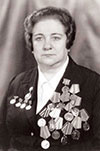 |
1967-68 and 1971 Acting Chairperson of the Presidium of the
Verkhovny Sovet Valentina
Alekseyevna Klochkova, Belarus (Autonomous Soviet Republic in the
USSR) |
|
First Secretary of the District Party
Committee Postavski 1970-78, Deputy Chairperson of the Supreme Soviet of
USSA from 1974, 1.
Vice Chairperson of the Soviet of Belarus 1978-1980.
(b. 1924-). |
|

|
1967-69 Premier Minister Savka Dabčević-Kúčar of Croatia
(Yugoslavia)
1969-70 Leader of Communist Party in Croatia |
|
Marshall Tito dismissed Dabcevic-Kucar as CP-leader because he considered her views
too liberal, 1970-71 Co-Leader of the Croatian Spring- movement, from
1990 Chairperson of the Democratic Party and 1992
Presidential Candidate.
She lived (1923-2009). |
|

|
1967-89 (†) Partner in Power Dr. Elena Ceauşescu, Romania
|
|
For
many years she was de-facto second in command after her husband Nicolai
Ceauşescu, who was Head of State and the Communist Party (1967-89), and
as he got more and more ill throughout the 1980s she became de-facto
leader of the country, and considered his most likely successor. She was
Member of the Politburo 1973-89, Minister and Chairperson of the Academy
of Science and first
Vice-Chairperson of the Council of Ministers and 1979-89. They were
both executed during the December-revolution of 1989. She lived
(1919-89). |
|

|
1967-71 Head of the Tribal Council Chief Betty Mae Jumper of
the Seminole Nation (USA) |
|
In
the Seminole Nation the clans are perpetuated trough women. She was
elected the first female chief and her main concern was to raise the
living standards of her tribe trough education. (b. 1923-). |
|

|
1967-
"Princess Joan I Bates of Sealand" |
|
In
1942 Britain constructed a base consisting of concrete and steel outside
British territorial waters. The fort was abandoned after World War II,
and on 2nd of September Roy I Bates created the Principality of Sealand,
and proclamed himself and his wife as joint rulers. (b. 1929-). |
|
 |
31.10.1968-24.02.72 Acting Head of State Song Qingling, China
(06.07.1976-05.03.78 Acting Head of State)
1979-1980 "Honorary President" |
|
Born into a rich Christian family, she was educated in the USA. In
1927-29 she was member of Government Council, 1929-49 Leader of
Opposition against her brother-in-Law President Chiang Kai-chek and
1948 Honorary Chairperson of the Kuomintang, 1949-54
Deputy Premier Minister, 1954-59
Vice-Chairperson of The Peoples' Republic (Deputy Head of State),
1954-76 and 1975-78 Vice-Chairperson of the National People’s
Congress, Vice-Chairperson of China People’s Consultative
Consultative Conference, CPPCC. In 1968-74 the Post of Chair of the
Republic was vacant and she and the other Vice-Chairperson, Dong Biw
shared the Presidential Powers. In 1976 the Chairperson of the NPC
died and the 21 vice-chairmen, including Song, acted as collective
heads of state until 1978 when a replacement was elected. 1980 she
was
Chairperson of the 3rd Session of the National People’s Congress.
Soong Qingling was widow of Sun Yat-Sen, Provisoric President of
China in 1911. She lived (1893-1981). |
|

|
1968
De facto Acting Prime Minister Bozena Machácová-Dastálová,
Czechoslovakia (circa 22.08-28.08) |
|
When
Soviet army invaded Czechoslovakia on Aug. 21st 1968, they captured,
imprisoned and later deported to Moscow the Prime Minister Oldrich
Cernik. All the Vice Premier Ministers escaped the captivity and were
hiding themselves. National Assembly put her in charge of Cabinet
meetings. She was not Premier Minister "de iure" (did not have official
appointment by President - because he was also deported to Moscow), only
"de facto". After the return of deported politicians on around August
28th all portfolios returned to pre-occupation period. She was Minister
of Agricultural Production 1954 and minister of Minister of Consumer
Industry until 1968. She lived (1903-73). |
|

|
1968-72 Chief Secretary of the Communist Party Dr. Latinka
Petrovic, Serbia (Yugoslavia) |
|
President of the Commission for Ideological Work of the Yugoslav Central
Committee 1965-66, and Secretary of the same Committee for
re-organization 1966-68. Member of the Serbian Central Committee. Like
her colleague in Croatia, Savka Dabcevic-Kúcar she was removed from
office because Tito considered her views too liberal. (b. 1933-).
|
|
|
1968-75 Reigning Queen Mother Mankopodi of
baPedi
(South Africa) |
|
Reigned
during the minority of her son, but
was deposed by the Royal Council, as a result of a dispute. (d.
late 1970's).
|
|
 |
1969- Paramount Chief Theresa Vibbi III of Kandu Leppiama,
Gbadu Levuma (Kenema District)
(Sierra Leone) |
|
Fled
the chiefdom 1997-99 during the civil war. |
|

|
1968-96 (†) Partner in Power Siti Hartinah, Indonesia |
|
Also
Known as Ibu Tien (Mother Tien), she was the most loyal aide and the
closest and most influential advisor of her husband, President Suharto.
She was known to express preferences as well as dislikes toward certain
cabinet ministers, often connected with their personal lives. She was
known as "Madame Ten Percent", because of her corruption. Born as
Princess of Mangkunegara in Surakarta, Central Java, and lived
(1923-96). |
|
 |
1969-74 Minister President Golda Meïr, Israel |
|
1946-48 Acting head of the political department of the Jewish Agency,
1948-49 Ambassador to the Soviet Union, Minister of Labour and
National Insurance 1949-56,
Minister of Foreign Affairs 1956-66 when she
became Secretary-General first of Mapai and then of the newly formed
"Alignment" (made up of three Labour factions). Upon the death of
Prime Minister Levi Eshkol in 1969, she was chosen to succeed him as
the "consensus candidate". In the October 1969 elections, she led
her party to victory. Shortly after she took office, the War of
Attrition - sporadic military actions along the Suez Canal, which
escalated into full-scale war - ended in a cease-fire agreement with
Egypt. Though the cease-fire was broken time and again by the
advancement of Egyptian missiles on the Suez Canal front, it did
bring a three-year period of tranquillity, shattered only in October
1973 by the Yom Kippur War. As
Prime Minister, Golda Meir concentrated much of her energies on
the diplomatic front - artfully mixing personal diplomacy with
skilful use of the mass media. Armed with an iron will, a warm
personality and grandmotherly image, simple but highly effective
rhetoric and a "shopping list," she successfully solicited financial
and military aid in unprecedented measure. She showed strong
leadership during the surprise attack of the Yom Kippur War,
securing an American airlift of arms while standing firm on the
terms of disengagement-of-forces negotiations and rapid return of
POWs. After she led her party to victory in the December 1973
elections, she resigned in mid-1974. She was born in Russia as Golda
Mabovic and later immigrated to USA. Mother of two children and she
lived (1898-1978). |
|
 |
1969-71 Administrator Elizabeth P. Farrington of the United
Nations Trust Territories of the Pacific Islands [USA] |
|
Director of the Office of the Territories in the United State
Department of the Interior that administered the Pacific Island
Territory for the United Nation. |
|
 |
1969-94
Dwabenhemaa
Nana Akosua Akyaamaa II of Dwaben (Ghana) |
|
Also known
as Nana Akosua Domtie, she succeeded Nana Dwaben
Serwaa II, who abdicated in that year. Her
daughter, Nana Akosua Akyaamaa III, succeeded
her on the Queenship throne of Dwaben and her
son, Nana Otuo Serebour II, is the present King
of Dwaben. |
Last update 14.01.17
|